Stars Wood catalogue and lead desk
Stars Wood is the authorized Pollmeier distributor in Egypt. Its buyers are furniture, door and kitchen factories.
- What we built
- English and Arabic
- Size catalogue
- Request list
- Lead inbox
- Stock grid
- Content editor
- Chat widget
- Built with
- Next.js
- React
- TypeScript
- Tailwind CSS
- Prisma
- PostgreSQL
The problem
Buyers had no way to see which beech sizes exist or which are in stock, so every inquiry became a phone call and a manual answer from a spreadsheet.
The size list lived in that spreadsheet and in people’s heads. Inquiries came in by phone, WhatsApp and email, with no record, no status and no history. Nothing existed in Arabic, the language most of the local trade buys in.
What changes in how they work
A buyer can see every standard size and whether it is available, then send several sizes as one request, in English or Arabic, without an account.
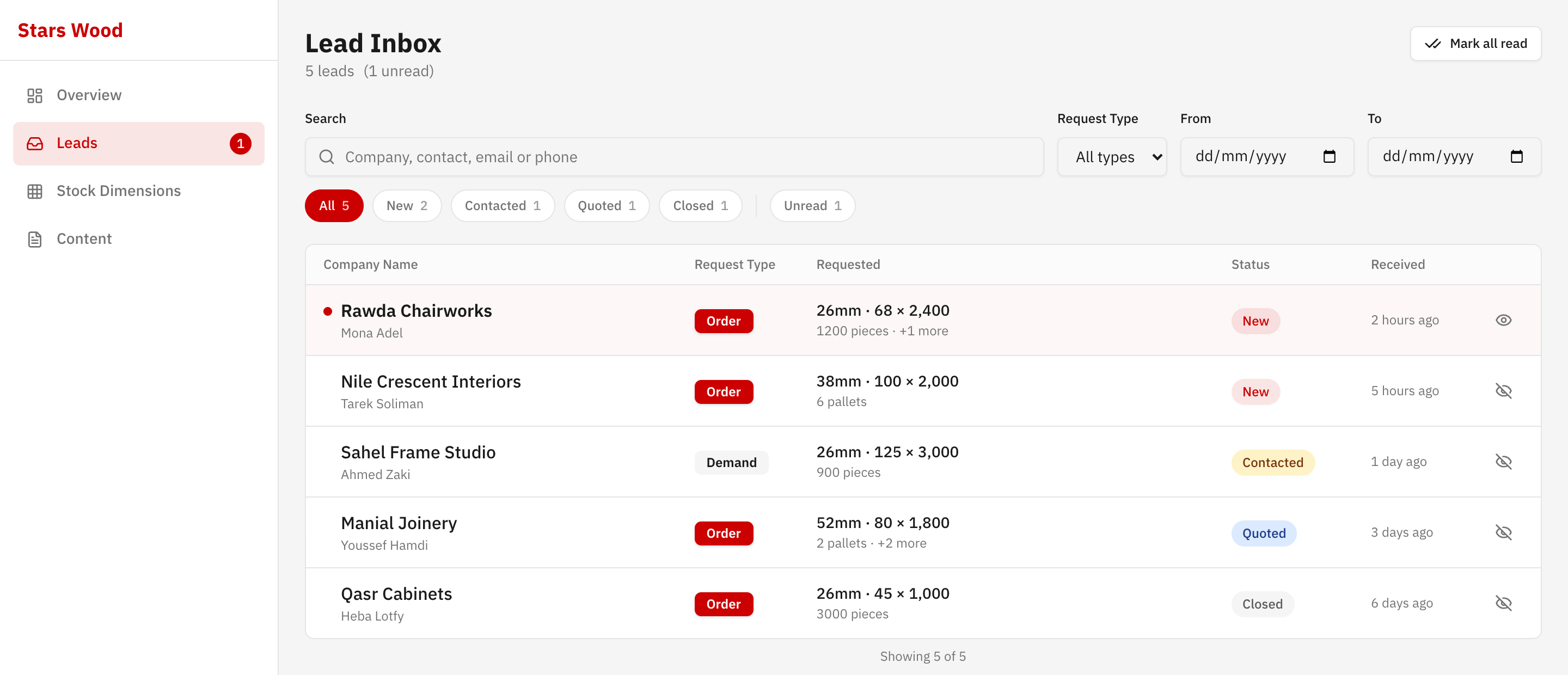
The request reaches one inbox with the sizes, quantities and contact details already attached, plus a copy of exactly what was asked for. The sales desk moves it through New, Contacted, Quoted and Closed.
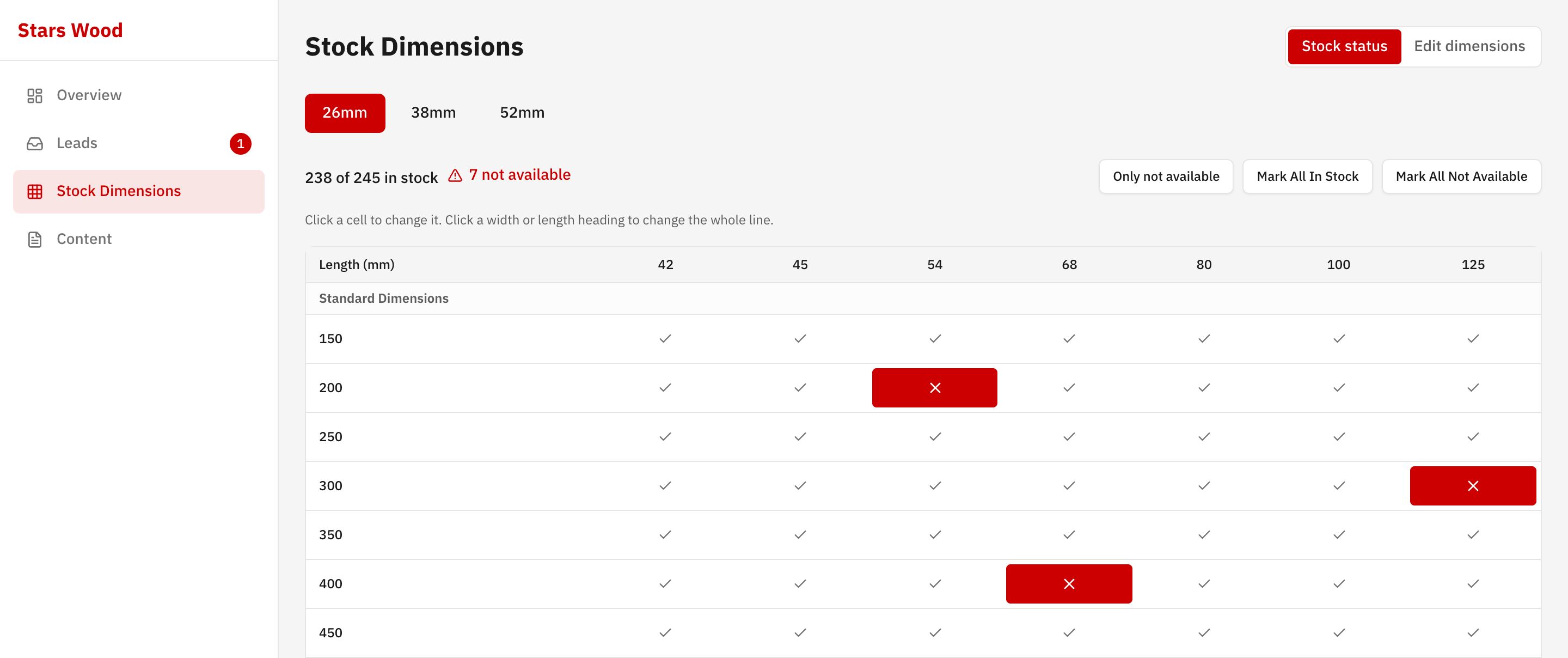
The sales desk sets availability itself, and the public catalogue follows. No developer and no spreadsheet in between.
What we built
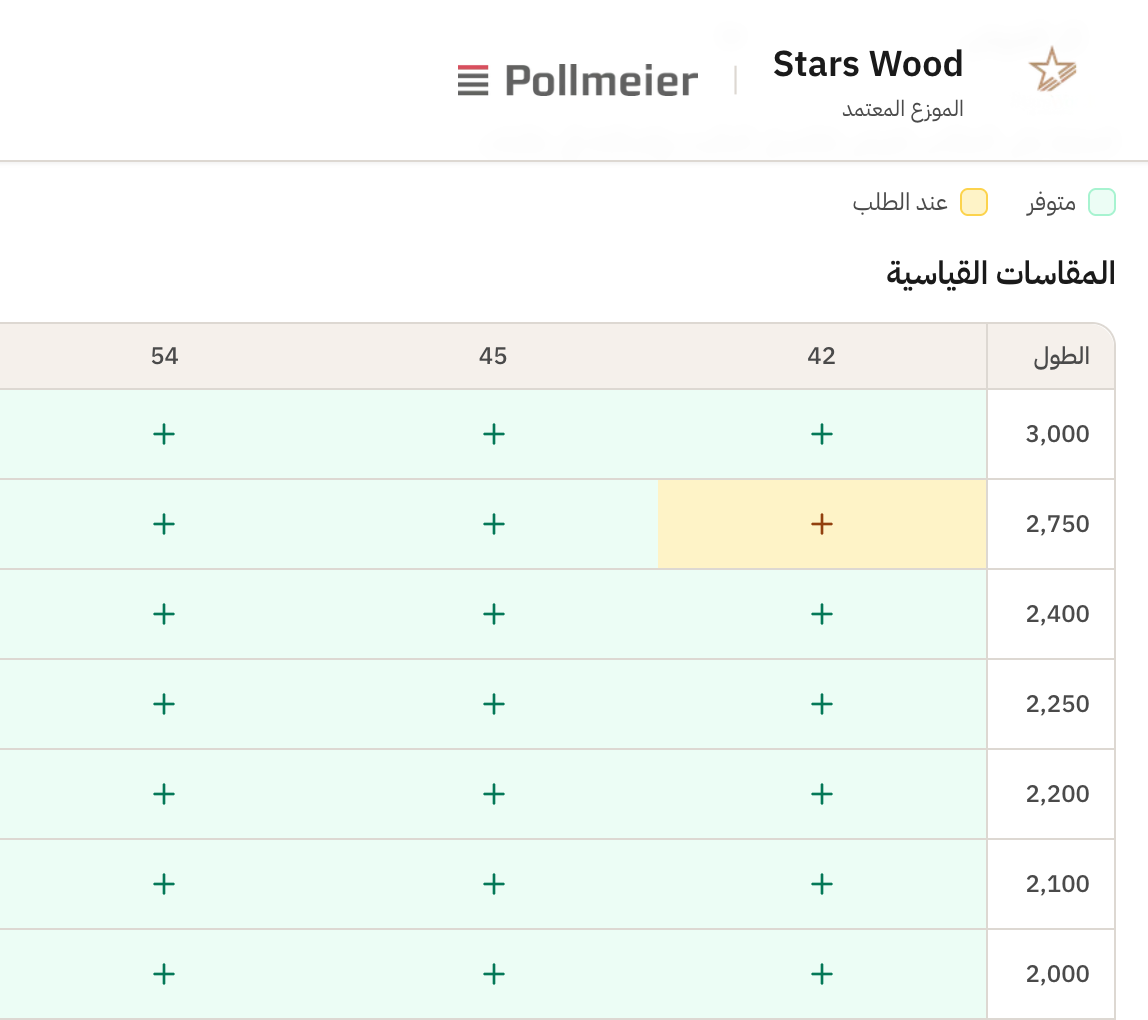
- An English and Arabic site. The Arabic side is a fully mirrored right-to-left layout, not translated text in a left-to-right frame.
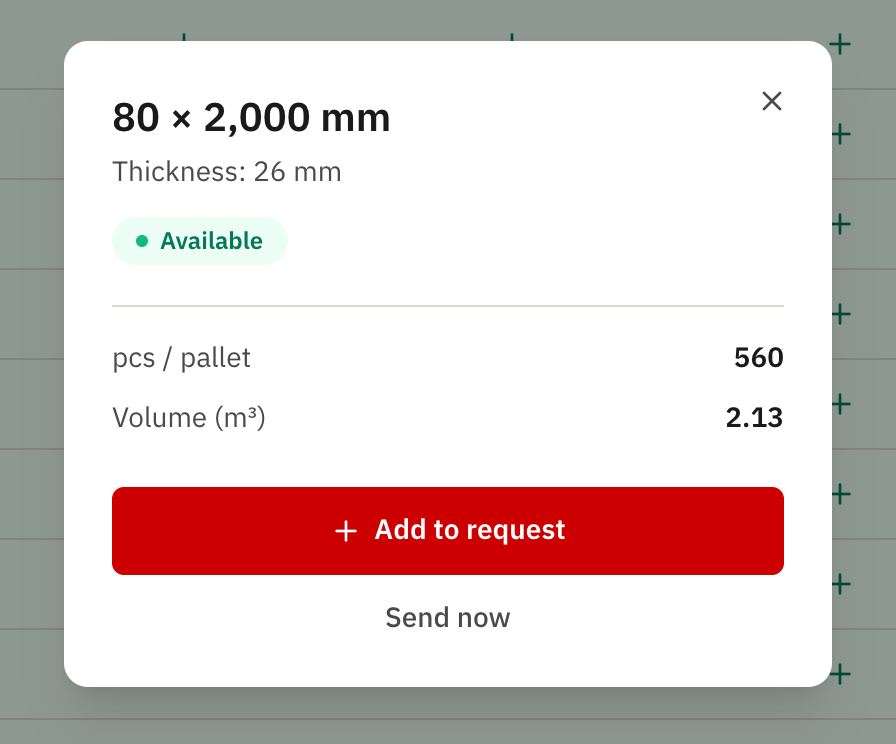
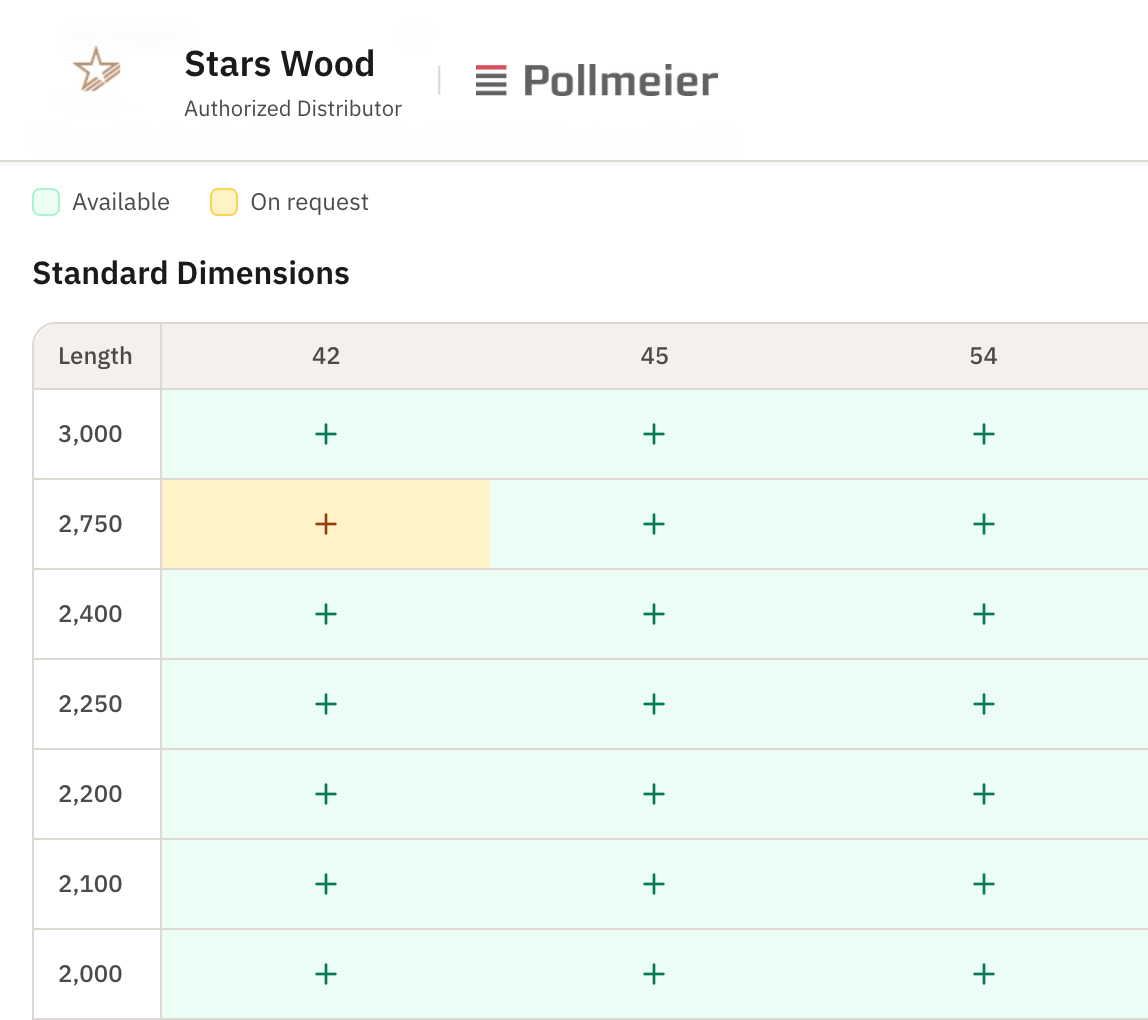
- A size catalogue for three thicknesses, 26, 38 and 52 mm, with every standard size on one grid per thickness. Each size is marked Available or On request and opens its pallet count and volume.
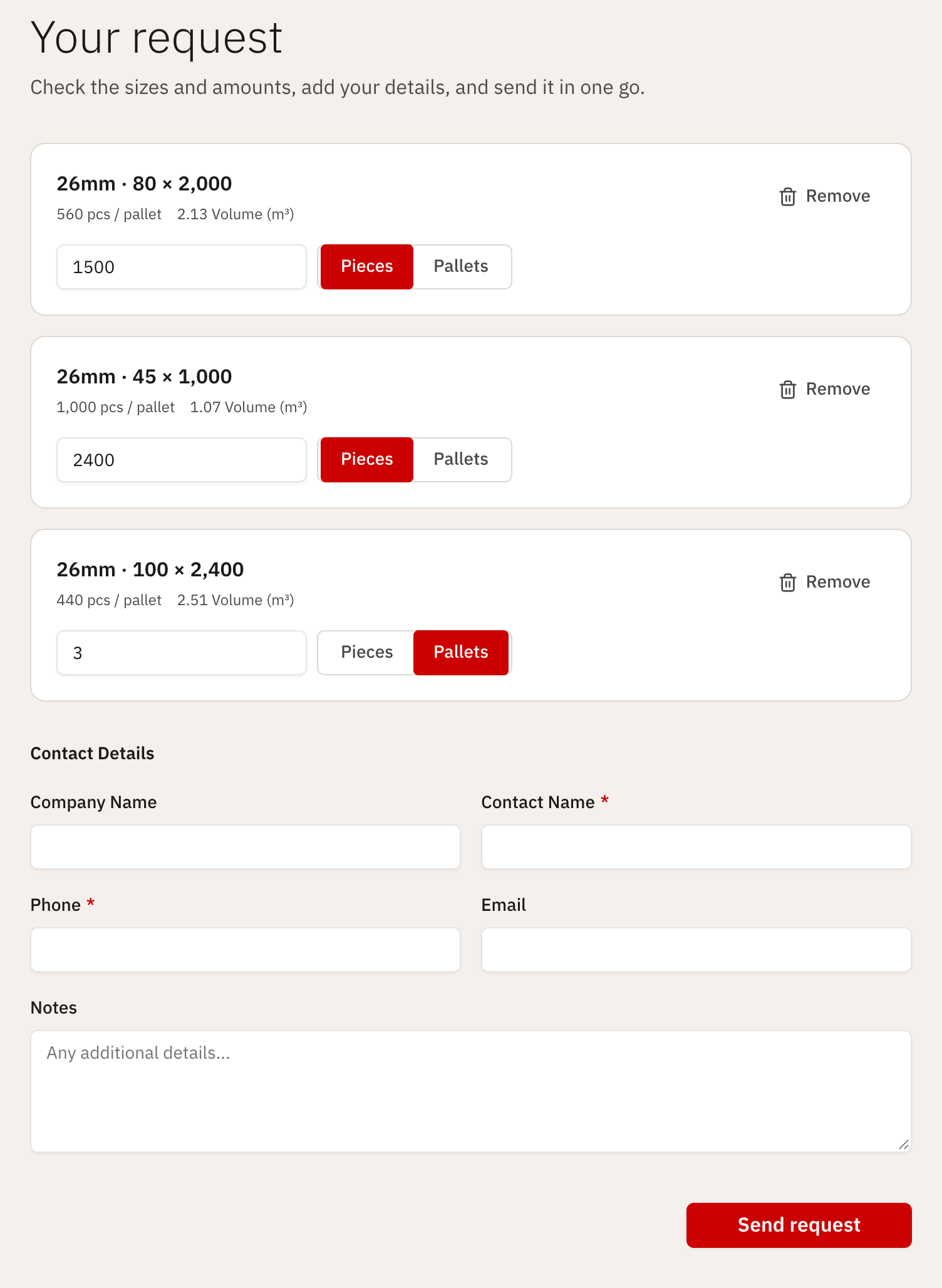
- A request list: collect sizes across pages, set pieces or pallets on each line, and send once. Of the contact details, only a name and a phone number are required.
- A lead inbox with read and unread, filters by type and date, and free-text search.
- A stock grid the sales desk edits itself, one cell per size.
- A bilingual content editor with image management, and a guided chat widget that points visitors to sizes, contact or a request.
Where it stands
Built, and not yet launched. There are no buyers on it yet, so there are no results to report.
The inbox and request screens show sample data, not real buyers.